The Best Bike Child Seats
To help you find the perfect bike child seat, we continuously put forth the effort to update and expand our list of recommendable bike child seats. Our team collects, edits and publishes new information, in order to present it to you in an accurate, significant and neatly arranged way.
Our Picks
8 More Bike Child Seat Alternatives
Table of Contents
Buying Guide
When an individual loves to ride a bike, he or she may want to include his or his kids. With a bike child seat, a person can take an infant or a small child as he or she enjoys a recreational bike ride or to work. This guide will help a person to choose the perfect bike child seat for any occasion.
Carrier Position
When purchasing a bike child carrier, a customer can choose between three basic mounting positions. These positions are front, rear, and center mount. The rear mount is the most popular, but the other mounting positions can be used in most places.
When choosing a carrier, the most important feature is the ability to mount and remove it quickly from the bike. Some seats require brackets or adapters that may be an issue if the carrier is frequently removed.
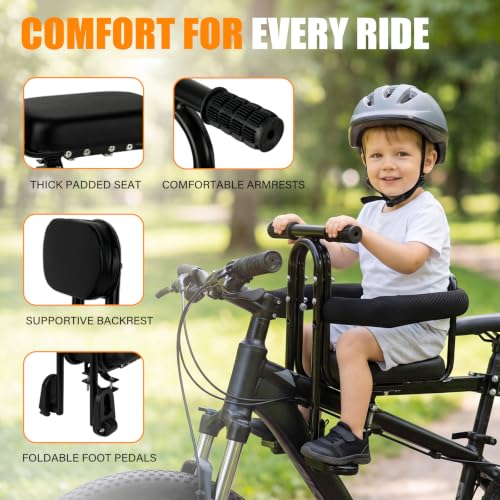
A front or center mount allows the child to sit in front of the adult and allows the adult to cradle the child close to the body. This closeness gives the adult and child a different type of experience than with the rear mounted carriers.
However, this closeness can also interfere with the adult’s ability to move and pedal the bike correctly. This type of seat also has a lower weight limit than a rear mount.
A front or center mount typically attaches to the handle bars so some measuring needs to be done to determine if the bike can accommodate a front or center mounted carrier.
A rear mount carrier does not allow the adult to keep an eye on the infant because it is placed on the rear end of the bike. This position does not allow the adult and child to interact with each other.
A rear mounted carrier also has a higher weight and age limit. A bike rack is required for most rear-mounted seats, but the hassle may be worth the mobility a person has with the rear mount.
Front or Center Mounted Seats
These seats are suitable for children who are nine months to about two years old. Before using a front mounted seat, a person should find the answers to three questions.
1. Does the bike have a threaded or threadless headset? An adult bike typically has two types of headsets which are threaded and threadless. A threaded headset uses a threaded locknut to be tightened, and a threadless one does not. A threaded headset bike is usually more compatible with a child bike seat, and a threadless one can be problematic.
2. Is there enough space on the bike to mount the seat? The front and center mounted seat is attached to the bike with brackets directly below the handlebars. The brackets range from 0.5” to 1.5” thick, so it is important to make sure there is enough room.
3. How much space is between the seat tube and the handlebars? A front or center mounted carrier can take up to 10” of space. If the top tube distance is not over 20”, a person will have issues trying to ride with a front or center mounted child seat.
Rear Frame Mounted Child Seat
An infant as young as nine months old and up to forty-eight pounds can use a rear mounted seat. Rear frame=mounted seats are much larger than front or center mounted carriers. They also generally offer a variety of extra features such as the ability to recline, extra suspension, and adjustable straps and foot pedals.Before purchasing a rear frame mounted seat, a bike must be inspected to verify that a rear frame mounted seat will fit properly. These two questions should be asked and answered:
1. Are there cables on the seat tube? For a rear frame mounted child seat to be properly installed, the seat tube must be clear of any type of cables and low mounted frame tubes. If the bike frame is carbon fiber, it cannot be used for a rear frame seat.
2. Is the seat close to the frame of the bicycle? Almost all brands of rear frame mounted carriers require at least two inches of space below the seat to be mounted.
Rear Rack Mounted Seats
Unlike a rear frame mounted seat, a rear rack mounted seat requires a rack to be properly mounted. The rack attaches to the frame over the rear tire of the bike, and then the carrier attaches to the rack.
The rack has to be purchased separately from the bike and child seat. For safety, the weight limit for the rack must be at least sixty pounds. Before buying a rear rack mounted seat, the following questions should be asked and answered:
1. Are there eyelets on the bike to connect a rack? A bike must have eyelets to mount a rack properly. A bicycle typically has two sets of eyelets. One set is located near the axle, and the other set is located near the top of the triangle on the rear of the bike. The top eyelets are easier to find, so a person should look for those near the triangle.
2. Does the bike have disc brakes? When a bike has disc brakes, a large rotor is placed around the tire’s hub, and this rotor requires a special rack to be installed.
Safety
When purchasing a bike child seat, an individual biggest concern should be safety. A child is precious and should be protected. Generally, bike child seats are safe, but three things should be considered.
1. The Child’s Age- The child should be able to lift his or her head and be able to support themselves. Typically, it is recommended for a child over the age of twelve months. It is crucial to follow the guidelines for weight limits and age given by the carrier’s manufacturer.
2. Secured Seating- Any child bike seat should have safety straps and foot straps that are easy to adjust and tighten to fit the child. The foot straps will prevent the child from kicking the rider of the bike.
3. The Correct Gear- Appropriate clothing will prevent the child from being hurt. Loose clothing can get caught in tires and chains. A helmet should also be worn to protect the child’s head if a crash happens.
Top Rated Bike Child Seats
If you're looking into finding the best rated bike child seat, you should probable check out the Schwinn Deluxe Carrier. We looked at various sources of reviews and found this one to have the best mix between review count and average rating stars.
The Lowest Price We Could Find
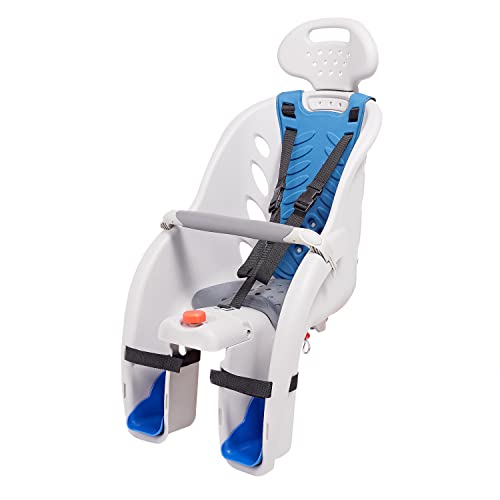
Often, going for the best price is a simple but good option. With a price of $33.99 (last checked this morning), we do not list any other bike child seat cheaper than the Auwey Seat. Just remember that it's not always the best option to go for the cheapest one.
The Bike Child Seat With the Most Reviews
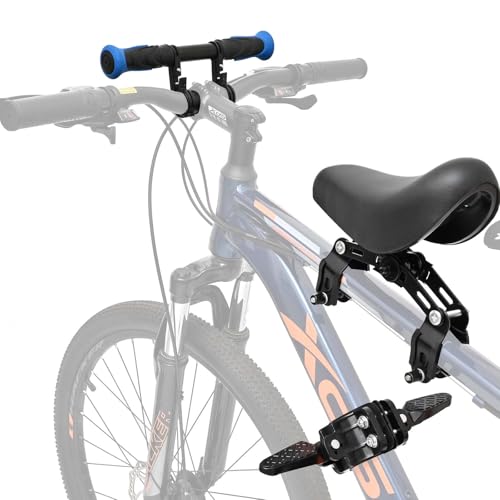
With at least 789 reviews and counting, the Schwinn Deluxe Carrier might be another option to consider. This large amount of reviews signalizes that many people are using it, with most of them beeing satisfied.
High Quality Bike Child Seats
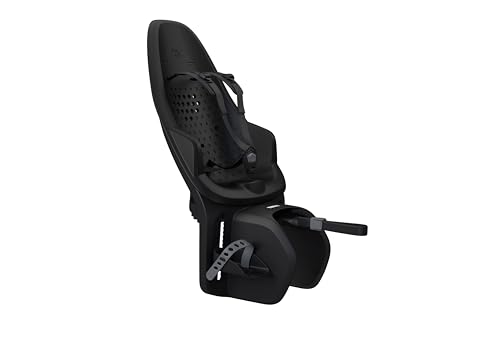
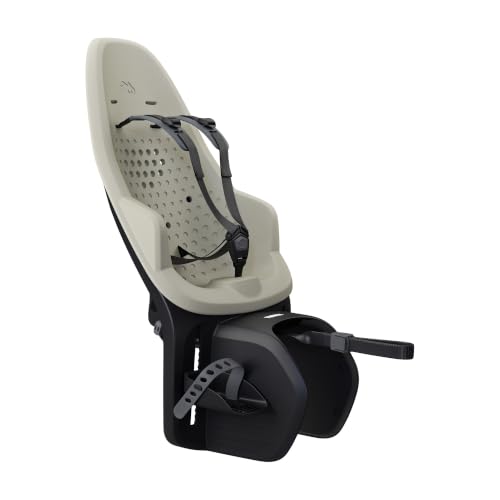
It's quite rare that the saying "You get what you pay for" turns out incorrect. If you have the money on the sideline, feel free to choose the most expensive item from our list: The Thule Yepp 2 Maxi Seat currently sells for $269.95.
The Bike Child Seat With the Most Clicks
If you trust us and our users, feel free to check out the Schwinn Deluxe Carrier. Our statistics say that it is the most favorite Bike Child Seat from the list above.
Our Bestseller
If you're still undecided, I would recommend that you go with the masses and choose the top selling bike child seat: The Thule Yepp 2 Maxi Rack-Mounted Seat is the hottest bestseller in this category right now.
Bike Child Seat Reviews
Further Reading on Bike Child Seats
Research
Wikipedia Article for Bike Child Seat
Comments
About this Article
It was last updated on 2026-10-15 08:45:12 and has been viewed 5213 times.