The Best Dog Flea Treatments
To help you find the perfect dog flea treatment, we continuously put forth the effort to update and expand our list of recommendable dog flea treatments. Our team collects, edits and publishes new information, in order to present it to you in an accurate, significant and neatly arranged way.
Our Picks
7 More Dog Flea Treatment Alternatives
Table of Contents
Buying Guide
Keep in mind that most dog flea treatments are designed mainly as preventatives. These treatments will kill any fleas that hitch a ride on your dog’s fur from outside, and prevent any infestations from occurring. Treating an active infestation requires more than just a preventative, however; you have to treat the surrounding environment as well. This is because flea eggs and other life stages tend to take root in the home rather than on your dog.
Chemical dog flea treatments
Chemical treatments may contain two basic types of ingredients: one that kills adult fleas, and one that prevents immature fleas from growing into adults. Some treatments contain just one of these types of ingredients, and some contain both. If you’re concerned about an active infestation, make sure to use a treatment that contains multiple active ingredients in order to remove all life stages of the flea.
Chemical treatments can be prescribed by a veterinarian or bought over the counter. Over-the-counter treatments are less strong than prescription treatments, but they are also less expensive.
Long-term treatment: topical and oral products
Spot-ons are one of the most common topical flea treatments. They can be bought over the counter and they’re easy to use. They’re designed to be applied to one spot on the skin of your dog’s back. They’re usually effective for at least a month. However, not all spot-ons work for all dogs, so it may take some experimentation to find the right one for you.
A flea dip or rinse is applied to the entire animal rather than just one spot. You should use these products in a well-ventilated area, and obstruct the animal’s ears and eyes from the product.
Many veterinarians are now prescribing oral flea treatments as well. These include brands such as Comfortis and Nexgard. They’re more effective than topical treatments, in part because flea populations have not built up any resistance. They can start working in as little as 30 minutes. These treatments can only be used with a prescription.
Immediate relief: baths, sprays and tablets
If your dog is suffering and needs some instant relief, flea baths and sprays can do the trick. These products are not very long-lasting, but they’re immediately effective. Most flea baths can be used up to weekly, while sprays can be used on an as-needed basis. These products are usually quite affordable, since one bottle will last for a long time.
Most flea shampoos kill only adult fleas. Flea shampoo needs to be applied and left on the fur for several minutes in order to be effective. You can comb your dog with a flea comb while they’re in the bath and allow the dead fleas to go down the drain.
Sprays work in a similar manner and can work well for dogs that resist baths. However, you may have to manually remove dead or dying fleas after using the spray.
Another lesser-known yet more effective option for immediate relief is Capstar. Give this oral tablet to your dog and adult fleas will die in as little as 30 minutes. This is especially useful when combined with other longer-lasting treatments. Use Capstar to kill the flea population that’s currently on your dog, and apply a long-term preventative immediately afterward to kill any additional fleas that may hop onto your dog.
Keep in mind that this product only stays in your pet’s system for up to 24 hours. As a stand-alone product, it’s not practical to use long-term.
Flea collars: do they work?
Flea collars are effective for longer than topical treatments although they are less robust.
The chemicals are gradually released from the collar onto your dog’s skin.
Many cheap flea collars are not very effective at distributing the product evenly. If you choose to use a flea collar, it’s best to spring for a higher-end one, such as Bayer Seresto. Though they have a higher upfront cost, they can be effective for up to 8 months at a time, making them a great cost-effective option in the long run.
All-natural dog flea treatments
If you’re hesitant about using pesticides on your dog, natural remedies can be effective at prevention and treatment. They’re especially useful for those who don’t need a potent chemical treatment. They can also be used in combination with chemical treatments for a comprehensive approach.
The power of dish soap
You can give your dog a quick flea bath without using any chemical shampoos. A bath with regular dish soap will effectively kill adult fleas by drowning them. Veterinarians usually recommend Dawn, but any similar product will do.
These products work by reducing the surface tension of the water, preventing fleas from being able to repel water or escape from drowning. If you use a gentle soap, you can do this on a regular basis as an immediate flea-killing solution.
Natural flea repellents and sprays
Companies such as Vet’s Best make flea sprays using plant-based ingredients, including peppermint oil and clove oil. They may also contain sodium lauryl sulfate. These ingredients work together to kill adult fleas and flea eggs, and they can be used directly on your dog as well as any bedding.
Similar plant-based sprays are designed to repel fleas, thus preventing them from jumping onto your dog in the first place. These formulas often contain eucalyptus, rosemary, peppermint, rosewood and other essential oils.
Diatomaceous earth is another popular option for killing fleas and eggs. This natural powder works by breaking up insect skeletons and drying out their bodies. Make sure to buy food-grade diatomaceous earth, and be careful not to breathe in too much of the powder.
Flea combs
Manually removing fleas is time-consuming, but in many cases it’s the only way to provide some relief to your pet.
For the natural approach to flea treatment, flea combs are absolutely essential. However, they’re useful even when using chemical treatments. They’re the easiest way to spot fleas on your dog and remove them before they can continue to bite and reproduce.
Treating the environment
If a flea infestation has already developed on your dog, you must treat the home as well. Vacuum consistently and thoroughly, and then fog or spray with a product that contains an adulticide as well as an insect growth regulator (IGR).
Foggers are useful for treating large areas at once, while sprays are better for spot-treating any hard-to-reach areas as well as cracks and baseboards. Most are effective for months at a time, though you may have to do multiple initial treatments.
You must also wash any bedding that your pet sleeps on weekly. Use hot water and soap, and treat the fabric with a flea spray containing an IGR.
Talk to your veterinarian
If you’re still uncertain about which flea product is right for your pet, don’t hesitate to ask your local veterinarian what they recommend. You should keep your vet updated about your treatment regimen, since they can recommend additional products based on your dog’s age, diet, breed, medical history and level of infestation.
A local veterinarian can also give expertise based on the local flea population. Some cities tend to have fleas that are resistant to topical treatments, for example. A local vet will be able to give specific recommendations based on what works for dogs in your area.
Top Rated Dog Flea Treatments
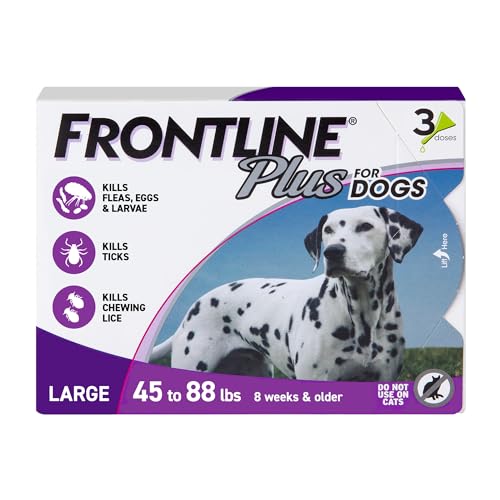
If you're looking into finding the best rated dog flea treatment, you should probable check out the FRONTLINE Plus & Tick Spot Treatment. We looked at various sources of reviews and found this one to have the best mix between review count and average rating stars.
The Lowest Price We Could Find
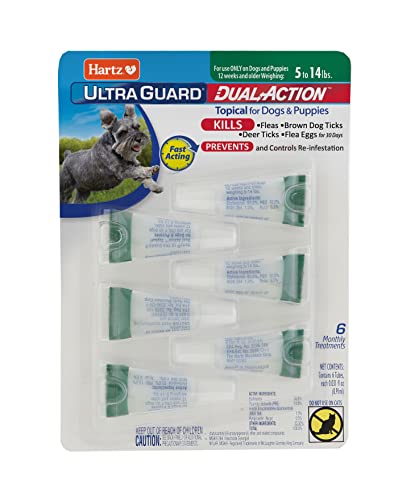
Often, going for the best price is a simple but good option. With a price of $13.04 (last checked this morning), we do not list any other dog flea treatment cheaper than the Hartz UltraGuard Dual Action & Tick Topical Treatment. Just remember that it's not always the best option to go for the cheapest one.
The Dog Flea Treatment With the Most Reviews
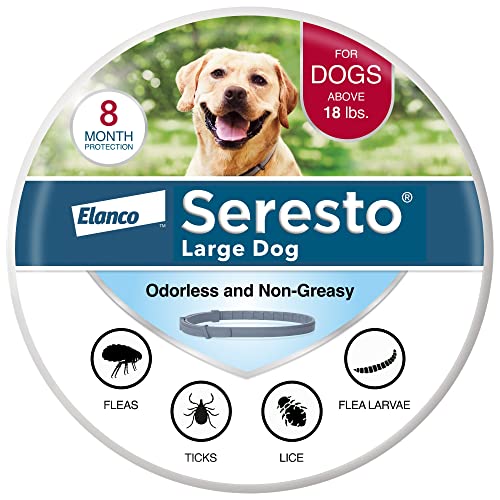
With at least 13056 reviews and counting, the Seresto 8-Month & Tick Collar for Large Dogs Over 18 lbs. might be another option to consider. This large amount of reviews signalizes that many people are using it, with most of them beeing satisfied.
High Quality Dog Flea Treatments
It's quite rare that the saying "You get what you pay for" turns out incorrect. If you have the money on the sideline, feel free to choose the most expensive item from our list: The Seresto 8-Month & Tick Collar for Large Dogs Over 18 lbs. currently sells for $59.92.
The Dog Flea Treatment With the Most Clicks
If you trust us and our users, feel free to check out the FRONTLINE Plus & Tick Spot Treatment. Our statistics say that it is the most favorite Dog Flea Treatment from the list above.
Our Bestseller
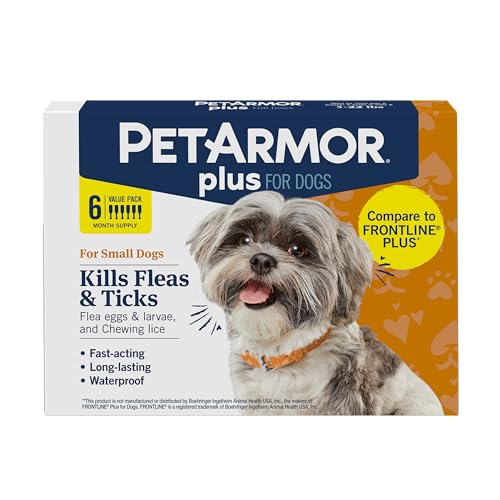
If you're still undecided, I would recommend that you go with the masses and choose the top selling dog flea treatment: The PetArmor Plus & Tick Topical Dogs 5-22 lbs is the hottest bestseller in this category right now.
Dog Flea Treatment Reviews
Further Reading on Dog Flea Treatments
Comments
About this Article
It was last updated on 2026-10-15 08:58:46 and has been viewed 5161 times.